
Abby’s teaching focuses on interdisciplinary learning, community engagement, and student-led projects that extend beyond the semester. She has a long-standing and diverse record of teaching excellence. Since 2008, she has worked with a range of learners, from public high school students in Brooklyn to continuing learners in Houston to undergraduates at rural, public and private, research universities. Abby is a proponent of integrative and project-based teaching. In 2019, she developed the concept of “Slow Interdisciplinarity”: a learner-centered approach to facilitating disciplinary stewardship and permeability in the classroom, the curriculum, and higher education writ large.
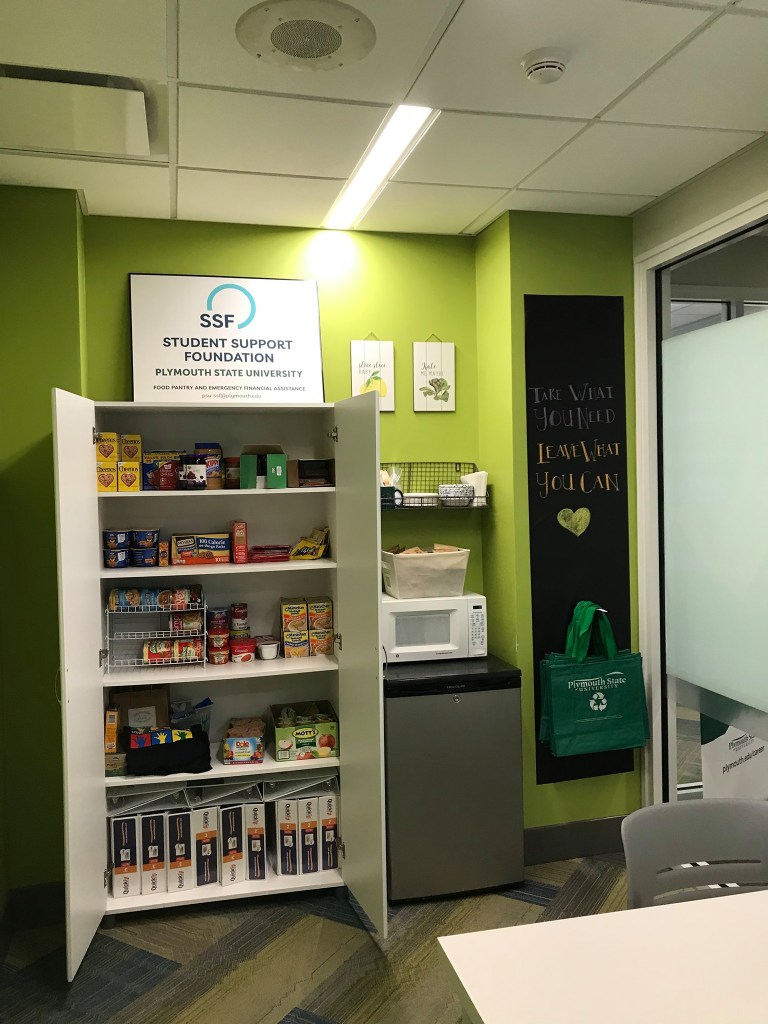
In the past few years, Abby created a project-based, interdisciplinary capstone course, “American Food Issues: From Fast Food Nation to Farm Stands,” which invited students to design their own solutions to pressing food issues within their communities. Engaging in contemporary debates about food justice, organic farming, and locavorism, students collaborated across their majors to develop and implement these solutions. They spearheaded community food recovery programs and distributed seedlings from local farmers at university events. One group developed and secured external funding for a centrally located community cupboard that radically expanded pantry resources for food insecure students. Though these students have since graduated, their work continues to feed countless campus community members.

Abby’s focus on project-based learning extends back to 2015, when she debuted “Sustainability in America,” the first writing-intensive seminar of its kind at Rice University. Encouraged by feedback from administrators and faculty, students took steps to implement their ideas for rooftop gardens and cardboard furniture installations—ideas that emerged from critiquing the concept of sustainability. She wrote about this course in an essay entitled “‘Against’ Sustainability” in Climate Consciousness and Environmental Activism in Composition (2020).

At Plymouth State, Abby has focused on developing interdisciplinary Environmental Studies experiences for students. In 2018, she co-designed and facilitated an Environmental Studies linked-course experience with the Chair of Environmental Science and Policy. Together, they planned and led a field trip to Green Mountain College, a leader in sustainability at the time. This trip encouraged students to think critically about institutional differences and see their own projects, which included reducing plastic water bottle use, creating free stores in the residence halls, and replacing toxic cleaning chemicals with vinegar, as addressing the unique needs of their own community.

Most recently, Abby collaborated with faculty across the disciplines to develop a new Sustainability Studies major at PSU. She designed and taught the first offerings of the new core Environmental Humanities course, which joined a suite of classes in Public Health, Economics, Social Science, and Environmental Science. In 2023, she and her colleagues secured a $56,867 grant from the National Endowment for the Humanities to support humanities programming that integrates public health and sustainability science. As part of this grant, Abby co-designed and co-taught a nature-based immersion course with three other faculty from disciplines in the sciences and social sciences. Featuring a field trip to the White Mountains in New Hampshire, this course integrated methods and content from the humanities, public health, and environmental science.

In her literature and theory courses, Abby invites learners to contribute to two free, digitally accessible, student-authored textbooks: the Open Anthology of Earlier American Literature and The Student Theorist. Far from finished products, these open texts blur the boundaries between discrete classes and build a broader intellectual community among students. As Abby has written elsewhere, these texts are an example of open pedagogy, an educational approach that invites students to shape and design their own learning experiences.
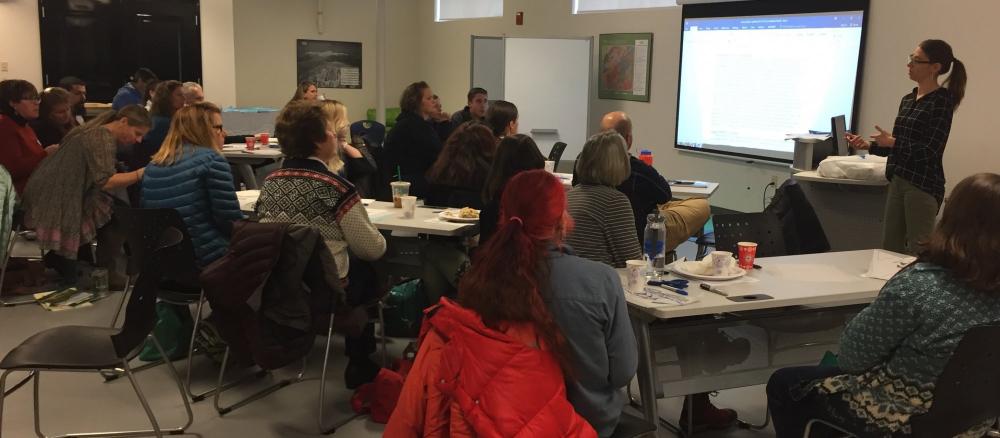
Abby is a recipient of the Transformative Teaching Award at Plymouth State University and the Graduate Instructor of Record Award at Rice University. She has served on local and national panels about high-impact teaching in higher education. Over the years, she has designed and taught courses in environmental humanities, American studies, contemporary food movements, literary theory, literature and medicine, American literature, environmental justice, wilderness literature, and environmental writing and communication, among other topics.
 ABBY GOODE
You must be logged in to post a comment.